
Buffet Equipment &
Display Systems
for Hotels, Resorts & Hospitality Projects
Commercial Buffet Solutions
Designed Around Presentation,
Holding Performance,
Guest Flow, and Efficient
Replenishment
OSE Project Supply supports hotels, resorts,
restaurants, executive lounges, banquet operations,
and hospitality projects with professional buffet
equipment and display systems selected according to
service format, food presentation, holding requirements,
guest circulation, and operational workflow.
From hot and cold presentation to beverage,
bakery, condiment, and live-station support,
each item is specified to create a buffet
environment that is visually consistent,
operationally practical, and easy to replenish throughout service.
What Is Included in Buffet Equipment & Display Systems?
Buffet equipment and display systems cover the presentation, holding, dispensing, protection, and service-support items used across hotel restaurants, resorts, lounges, banquet areas, and other hospitality buffet operations.
The exact equipment mix depends on meal period, menu type, guest volume, holding requirements, replenishment frequency, outlet concept, available counter space, and the desired presentation standard.
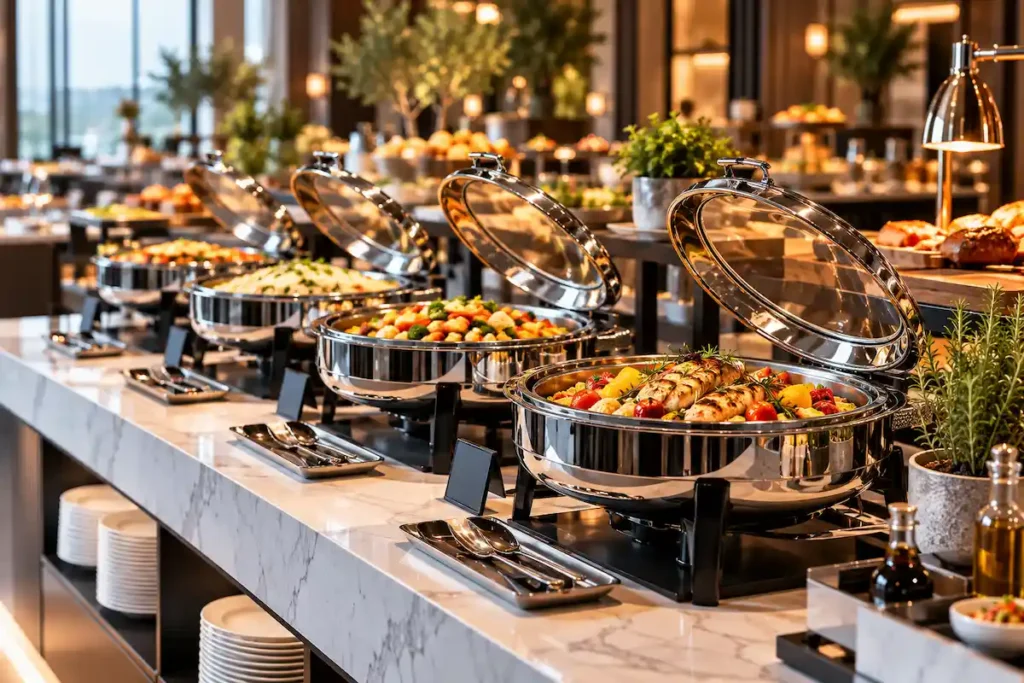
Hot Holding & Serving Equipment
Chafing dishes, induction-compatible buffet units, heat lamps, carving accessories, soup kettles, and related serving equipment used to maintain presentation and service temperature during operation.

Cold Display & Chilled Presentation
Cold trays, chilled platters, refrigerated display accessories, cooling inserts, salad presentation units, and other systems used for fruits, dairy, desserts, salads, and cold dishes.
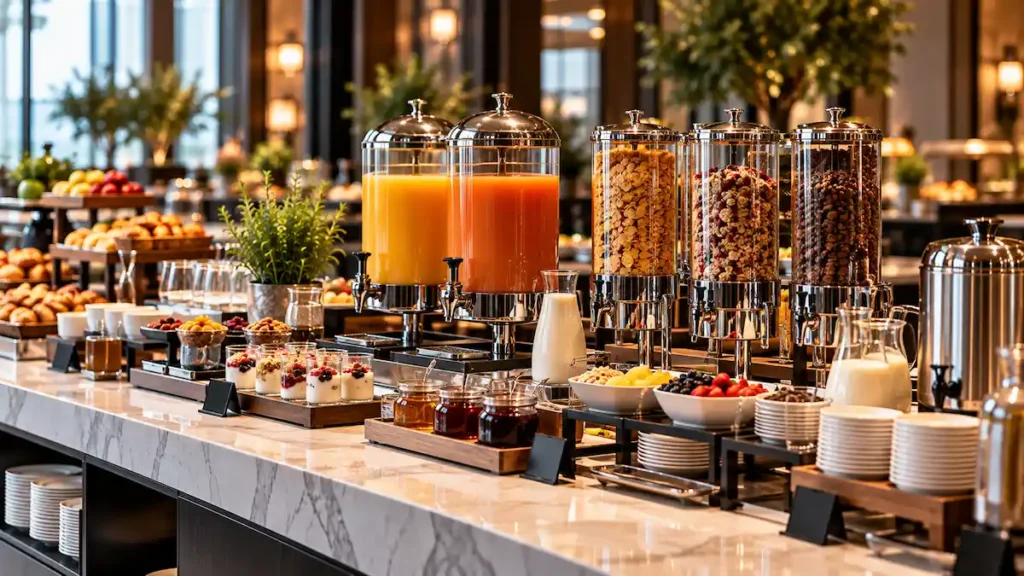
Beverage & Breakfast Dispensers
Juice dispensers, cereal dispensers, milk dispensers, beverage urns, condiment dispensers, and breakfast-service accessories designed for controlled self-service and easy replenishment.
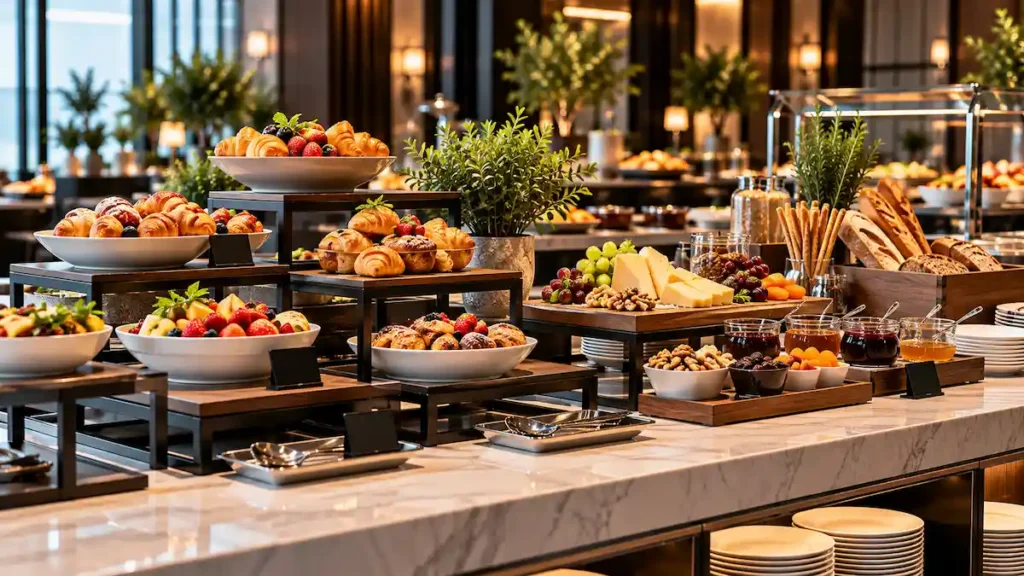
Risers, Platters & Display Accessories
Buffet risers, display stands, platters, bowls, trays, baskets, boards, and presentation accessories used to create visual hierarchy and organise food categories across the buffet.
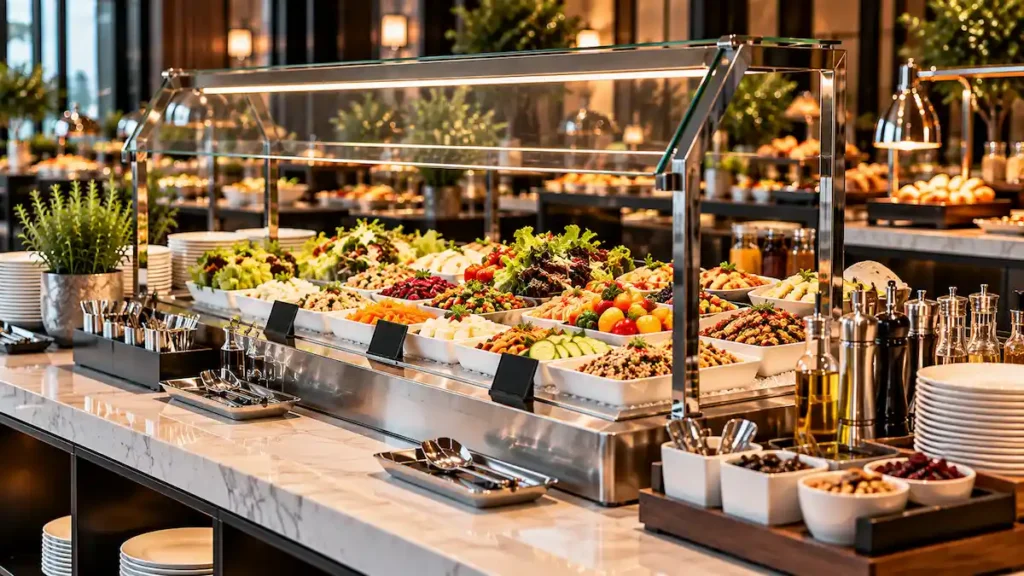
Protection, Service & Support Accessories
Sneeze guards, utensil holders, serving tools, label holders, condiment organisers, tray supports, drip trays, and other accessories that support hygiene, service access, and station organisation.
PROCUREMENT NOTE
A successful buffet package should balance presentation, holding performance, guest access, and replenishment—not simply maximise the number of display pieces.
Each item should support a defined food category, service function, holding requirement, or presentation objective within the buffet operation.
Matching Buffet Equipment to Service Format & Meal Period
Buffet equipment should be selected according to how each outlet serves food, how long products remain on display, how frequently they are replenished, and how guests move through the service area.
A breakfast buffet, executive lounge, banquet setup, and resort all-day dining operation may use similar categories of equipment, but the required capacities, presentation systems, holding methods, and service accessories can differ significantly.
01
Breakfast Buffet
Breakfast buffets typically require a balanced mix of hot holding, chilled presentation, cereal and juice dispensers, bakery displays, condiment stations, and beverage service accessories.
Equipment should support frequent replenishment, fast guest access, and clear separation between hot, cold, bakery, beverage, and self-service zones.
02
All-Day Dining Buffet
All-day dining operations usually require flexible buffet systems that can transition between breakfast, lunch, and dinner service.
Modular presentation, adaptable risers, interchangeable GN formats, controlled hot and cold holding, and easy reset between meal periods help reduce unnecessary equipment duplication.
03
Resort & High-Volume Buffet
Resort buffets often operate for longer service periods and higher guest volumes.
Equipment should be selected with strong holding performance, larger replenishment capacity, durable presentation components, and layouts that reduce congestion during peak periods.
04
Executive Lounge & Premium Display
Executive lounges generally require smaller-volume, presentation-led buffet equipment.
Compact dispensers, refined platters, tiered displays, premium finishes, and controlled portion presentation can provide a higher-end appearance without overloading limited counter space.
05
Banquet & Event Buffet
Ice, garnishes, pourers, napkins, straws, and frequently replenished items should be positioned to minimise interruptions during service.
The station should allow quick refill and reset without interfering with active drink preparation.
Portable chafing dishes, modular display systems, carving accessories, mobile beverage solutions, and flexible service equipment help support changing event configurations.
06
Live Station & Assisted Service
Live cooking and assisted-service stations require equipment that supports both preparation visibility and controlled guest interaction.
Heat lamps, carving accessories, utensil organisation, plate staging, protective screens, and replenishment space should be integrated without disrupting the surrounding buffet flow.
SERVICE PLANNING PRINCIPLE
The same buffet specification should not be copied across every outlet.
Each buffet should reflect its meal period, guest volume, service duration, replenishment pattern, counter configuration, and presentation standard.
Planning Buffet Presentation, Holding & Replenishment
A successful buffet should remain visually consistent and operationally stable throughout the entire service period—not only at opening.
Equipment selection should therefore consider how food is presented, how temperature is maintained, how quickly products are consumed, how often items are replenished, and how staff access the buffet without interrupting guest flow.
01
Match Holding Method to Food Type
Hot dishes, chilled foods, bakery items, beverages, and ambient products require different holding and presentation conditions.
The equipment should protect food quality while maintaining practical service access and presentation standards.
02
Plan Replenishment Frequency
Large containers are not always the best solution.
In many buffet operations, smaller display quantities with more frequent replenishment can improve freshness, visual appearance, portion control, and food quality during long service periods.
03
Maintain Food Visibility
Guests should be able to identify and access products without unnecessary movement or confusion.
Display height, container depth, riser position, label placement, lighting, and protective screens should support clear product visibility across the buffet.
04
Standardise GN & Container Compatibility
Where practical, buffet equipment should align with standard GN formats and commonly used internal containers.
This can simplify kitchen-to-buffet transfer, replenishment, storage, washing, replacement, and inventory control.
05
Protect Guest & Staff Flow
Replenishment routes should not conflict with the primary guest circulation path.
Staff should be able to refill food, beverages, utensils, and service accessories with minimal disruption to guests using the buffet.
06
Design for Easy Reset Between Services
Hotels operating multiple meal periods need buffet equipment that can be cleared, cleaned, reconfigured, and prepared efficiently.
Modular displays, removable components, adaptable risers, and standardised accessories can make transitions between breakfast, lunch, dinner, or event service significantly easier.
Operational Principle
Buffet performance depends on what happens during service—not only on how the buffet looks when it opens.
The strongest systems balance presentation quality with temperature control, replenishment speed, guest access, cleaning, and operational reset.
Avoiding Buffet Specification & Operational Problems
Many buffet problems become visible only after the operation begins, when presentation equipment, holding systems, replenishment routines, and guest circulation start interacting during real service.
A stronger specification process should anticipate these operational consequences before equipment is ordered.
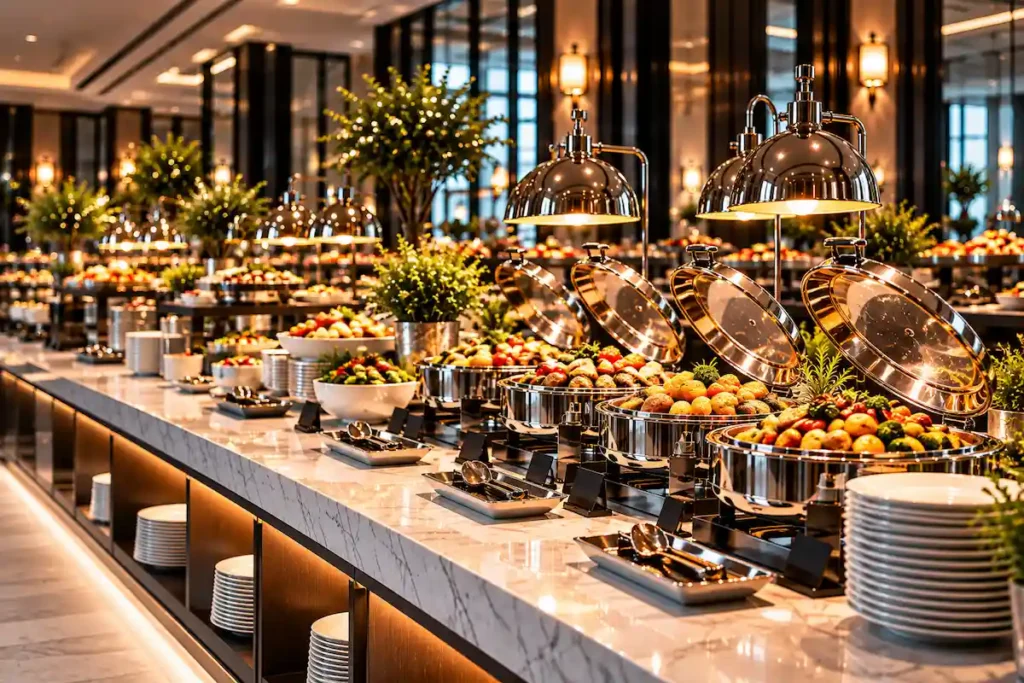
01 — Oversized Displays That Slow Replenishment
Large platters, deep containers, and oversized display pieces may look impressive at opening but can reduce freshness and make controlled replenishment more difficult.
Display capacity should reflect actual consumption rate and refill frequency rather than maximum possible volume.

02 — Poor Hot & Cold Holding Integration
Presentation equipment that does not match the holding requirements of the food can lead to temperature instability and inconsistent product quality during service.
Hot, chilled, and ambient presentation should be planned separately according to the product category.
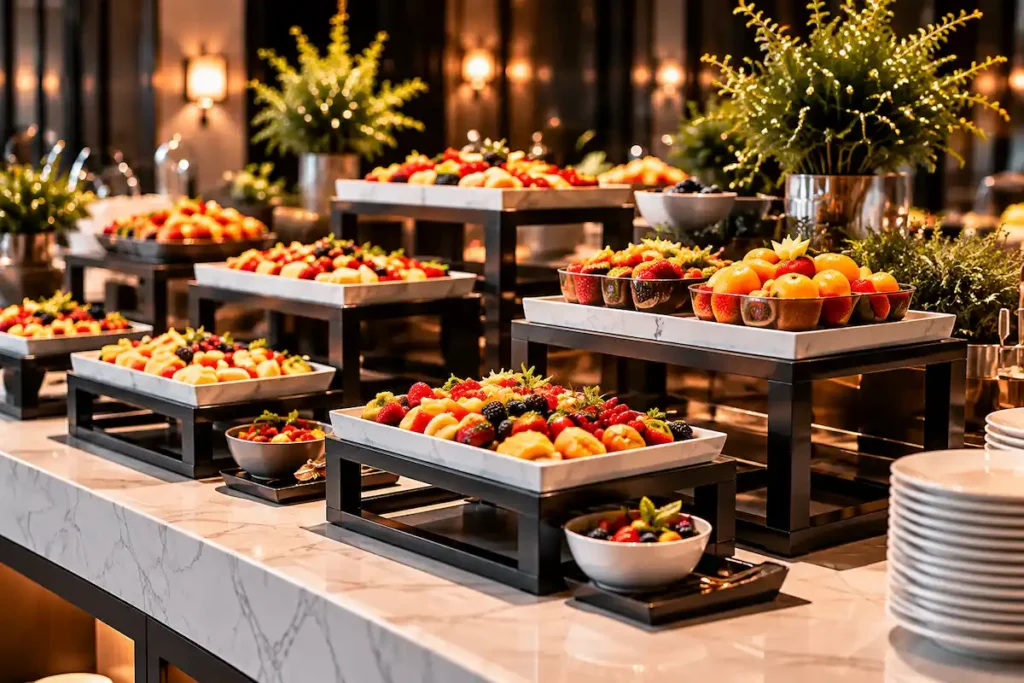
03 — Inconsistent Heights & Visual Hierarchy
Too many competing riser heights, platter formats, and display styles can make the buffet look fragmented rather than premium.
A controlled presentation hierarchy improves food visibility and creates a more coherent guest-facing display.
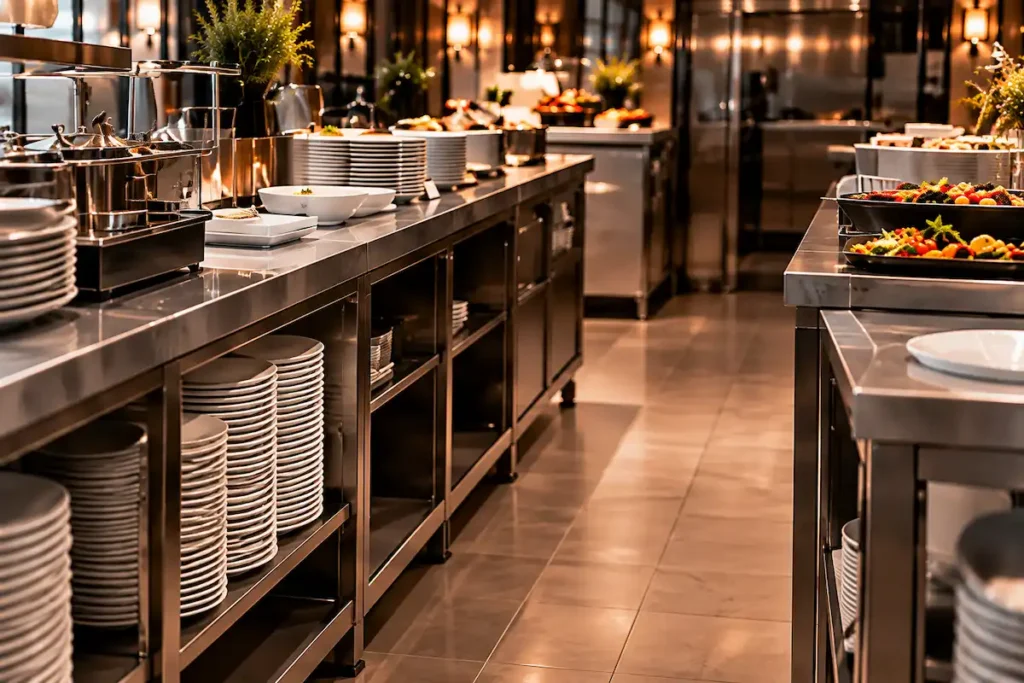
04 — Difficult Back-of-House Replenishment
Some buffet layouts look attractive from the guest side but provide insufficient access for staff replenishment.
Poor refill access can interrupt guest circulation, delay replacement of empty items, and create unnecessary service congestion.
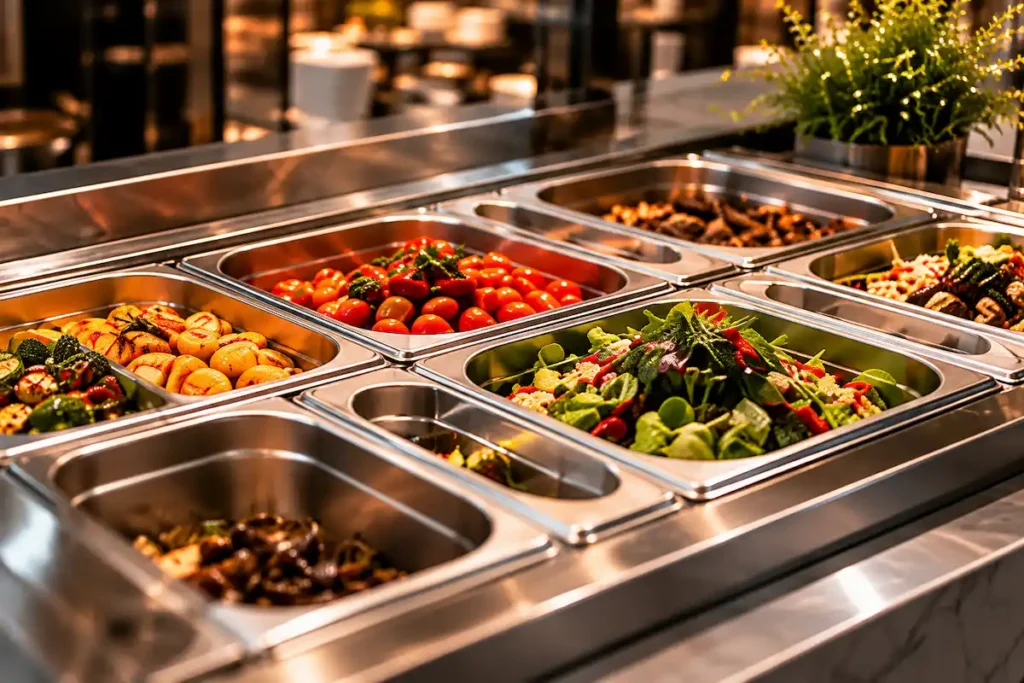
05 — Mismatched GN & Container Formats
Using display systems that require many unique container sizes or non-standard inserts can increase handling complexity, washing requirements, storage needs, and replacement difficulty.
Standardised formats should be used where they do not compromise presentation or menu requirements.

06 — Selecting Decorative Pieces Without Operational Value
Premium buffet presentation does not require every surface to be filled with decorative equipment.
Low-use stands, platters, bowls, and specialty accessories can increase procurement cost, cleaning effort, storage demand, and inventory complexity without improving the actual service.
Operational Consequence
Poor buffet specification creates operational friction long after purchasing is complete.
The objective is to reduce unnecessary complexity while protecting food quality, presentation standards, replenishment speed, and guest experience.
Related Procurement Support for Buffet & Display Systems
Buffet equipment is often procured alongside tableware, kitchen smallwares, beverage service items, and wider hotel OS&E requirements. Coordinating these packages can improve specification consistency, supplier management, cost control, and project delivery.
01
Hotel OS&E Procurement Services
Integrate Buffet Equipment Into the Wider OS&E Package
Coordinate buffet equipment, display accessories, service items, and related operational products within the wider hotel or resort OS&E scope.
Explore Solution →
02
Hotel Tableware
Coordinate Buffet Presentation With the Tabletop Programme
Align platters, bowls, service pieces, tableware, and presentation accessories to create a more consistent guest-facing food and beverage experience.
Explore Solution →
03
BOQ Procurement & Cost Optimization
Review Buffet Specifications, Quantities, and Product Variation
Identify unnecessary display pieces, specification gaps, duplicated items, incompatible formats, and opportunities to improve procurement efficiency before ordering.
Explore Solution →
04
Global Procurement & Logistics Coordination
Coordinate Multi-Supplier Buffet & OS&E Deliveries
Support supplier follow-up, order consolidation, export documentation, shipment planning, and project delivery across international hospitality developments.
Explore Solution →
Depending on project scope, these services can be used individually or combined into a coordinated procurement strategy covering buffet equipment, related OS&E packages, cost control, and international project delivery.
Buffet Equipment & Display Systems FAQs
PLANNING A BUFFET EQUIPMENT PACKAGE?
Build a More Operationally Efficient Buffet Package
Whether you are planning a hotel, resort, restaurant, banquet operation, or executive lounge, OSE Project Supply can support buffet equipment specification review, presentation planning, holding requirements, quantity validation, supplier evaluation, sourcing, and coordinated project supply.
Explore Our OS&E Categories →
Better presentation. Controlled holding. Faster replenishment. Smarter procurement.