
Professional Kitchen
Utensils for Hotels,
Restaurants &
Catering Projects
Commercial Kitchen Smallwares Procurement
for Efficient, Durable, and Standardised
Foodservice Operations
OSE Project Supply supports hotels, resorts, restaurants, catering facilities,
and commercial kitchens with professional kitchen utensils, cookware,
food preparation tools, GN containers, knives, storage solutions,
and operational smallwares selected for daily commercial use.
Why Professional Kitchen Utensils Matter
Professional kitchen utensils directly influence preparation speed, workflow efficiency, food consistency, hygiene, staff safety, and the reliability of daily commercial kitchen operations.
In high-volume hospitality environments, smallwares are used repeatedly across multiple shifts and workstations. Poorly specified tools can slow production, increase replacement frequency, create handling problems, and introduce avoidable operational inefficiencies.
For this reason, professional kitchen utensils should be selected as part of the operational design of the kitchen rather than treated as a last-minute purchasing category.
OSE Perspective
Professional kitchen utensils may represent a smaller portion of the equipment budget, but they are among the most frequently used items in the operation.
The right specification supports the kitchen every day, across every shift and workstation.
What Is Included in Professional Kitchen Utensils?
Professional kitchen utensils cover the day-to-day smallwares required for preparation, cooking, handling, portioning, storage, and service support in commercial foodservice operations.
The exact mix depends on kitchen type, menu, production volume, workstation layout, staff structure, and operating model. Hotels, restaurants, catering kitchens, bakeries, and central production facilities may all require different smallwares packages.
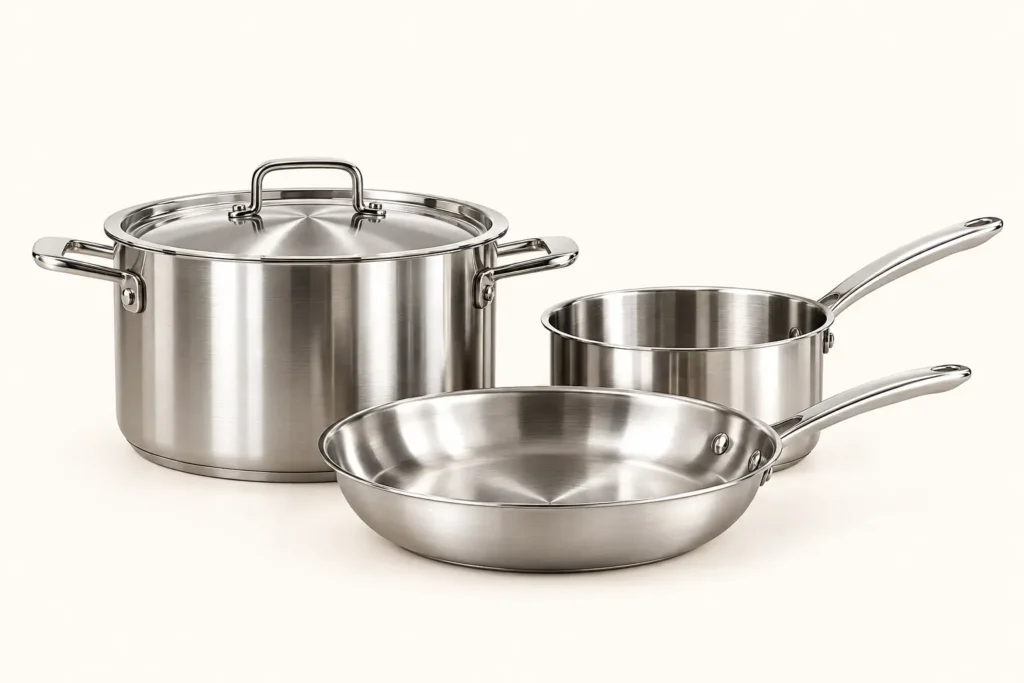
Cookware & Pans
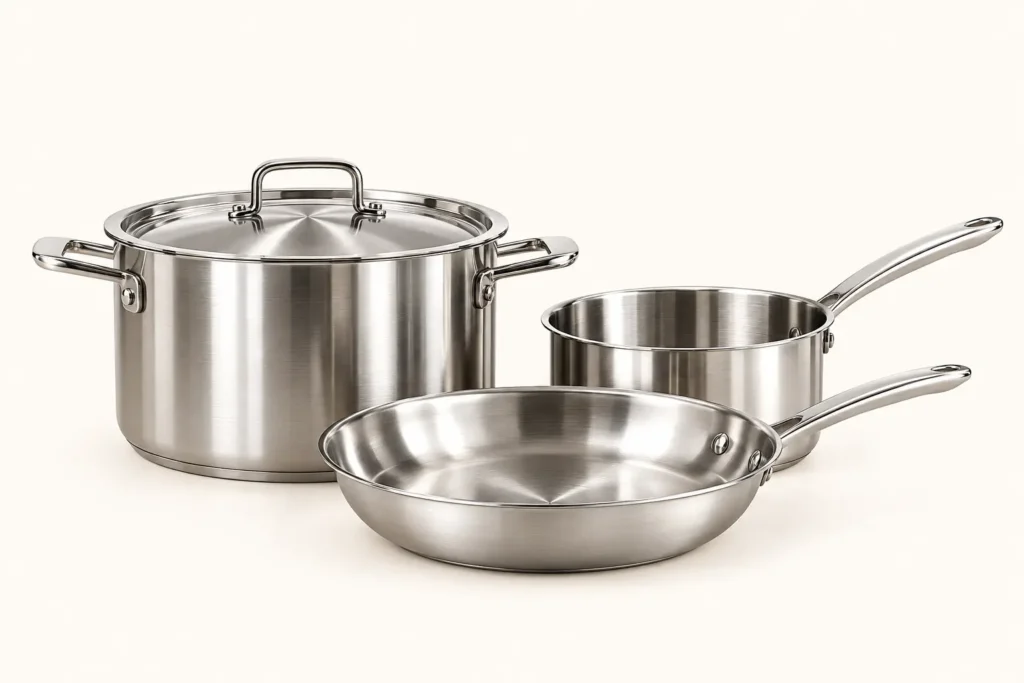
Saucepans, frying pans, stock pots, sauté pans, roasting pans, and other commercial cookware selected according to cooking method, capacity, and material requirements.

Cookware & Pans
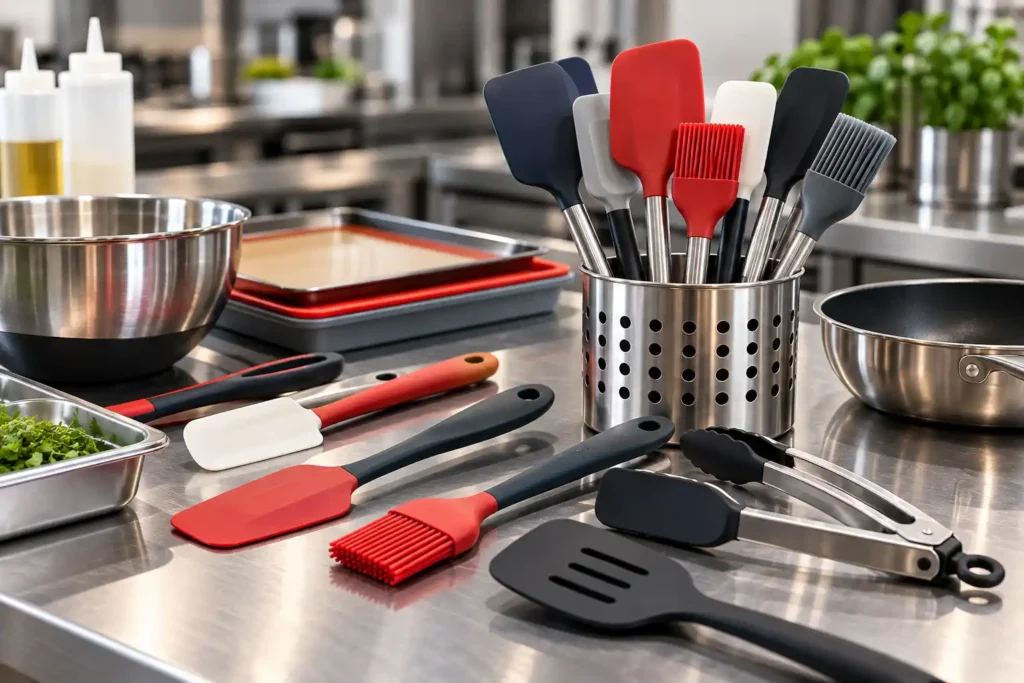
Spatulas, ladles, whisks, tongs, skimmers, turners, spoons, peelers, graters, and other daily-use preparation and cooking tools.
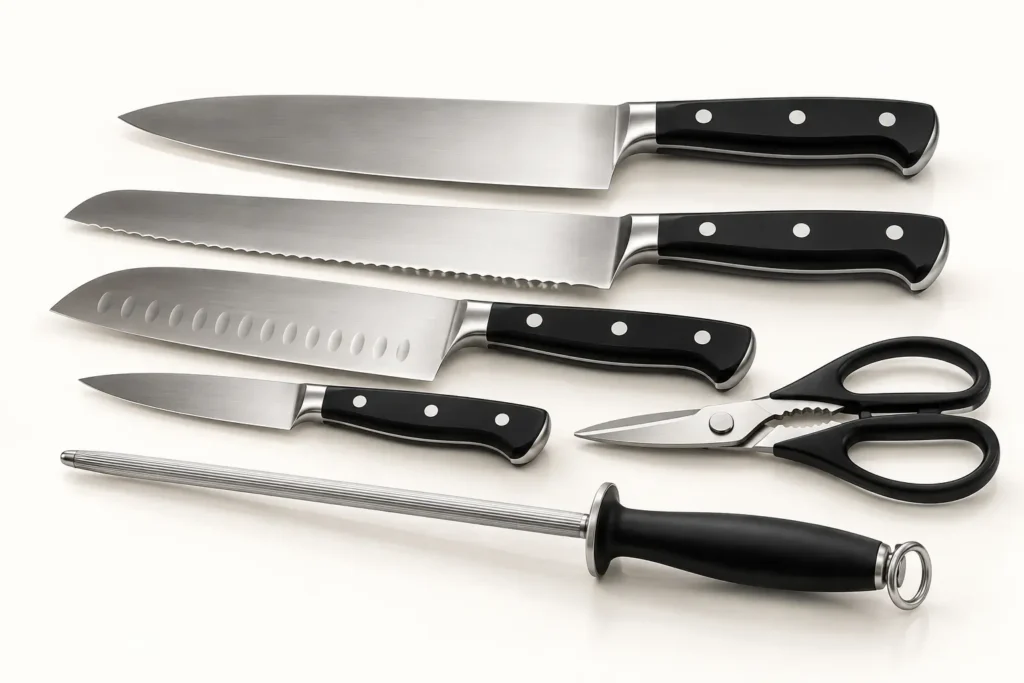
Knives & Cutting Tools
Chef knives, utility knives, boning knives, bread knives, sharpening tools, scissors, and other professional cutting equipment used across preparation stations.

GN Containers & Food Pans
Stainless steel and food-safe GN containers, inserts, lids, perforated pans, and related accessories for preparation, cooking, holding, storage, and service.
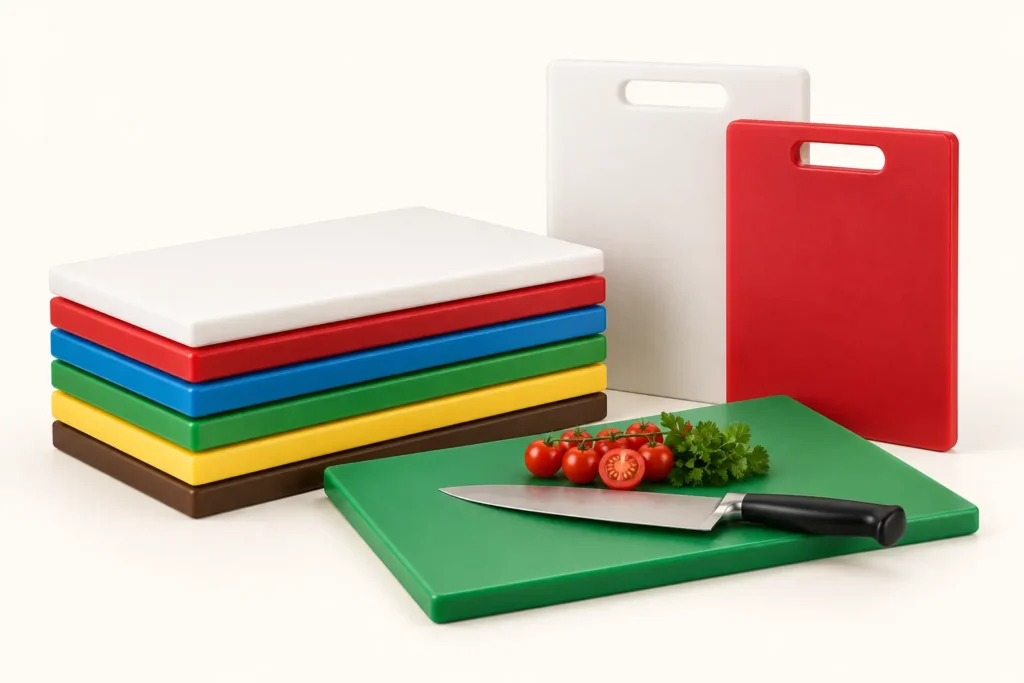
Cutting Boards & Preparation Surfaces
Commercial cutting boards and preparation surfaces selected according to hygiene procedures, food type, colour coding, and workstation requirements.
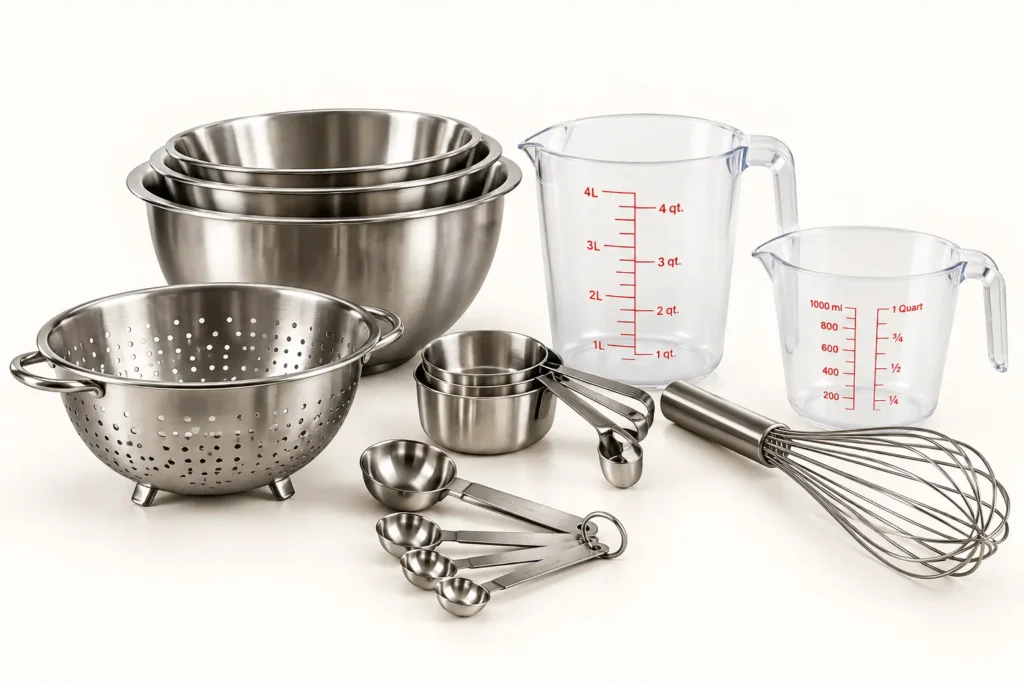
Mixing, Measuring & Preparation Tools
Mixing bowls, measuring jugs, measuring spoons, strainers, colanders, scales accessories, and other tools used for portioning and food preparation.
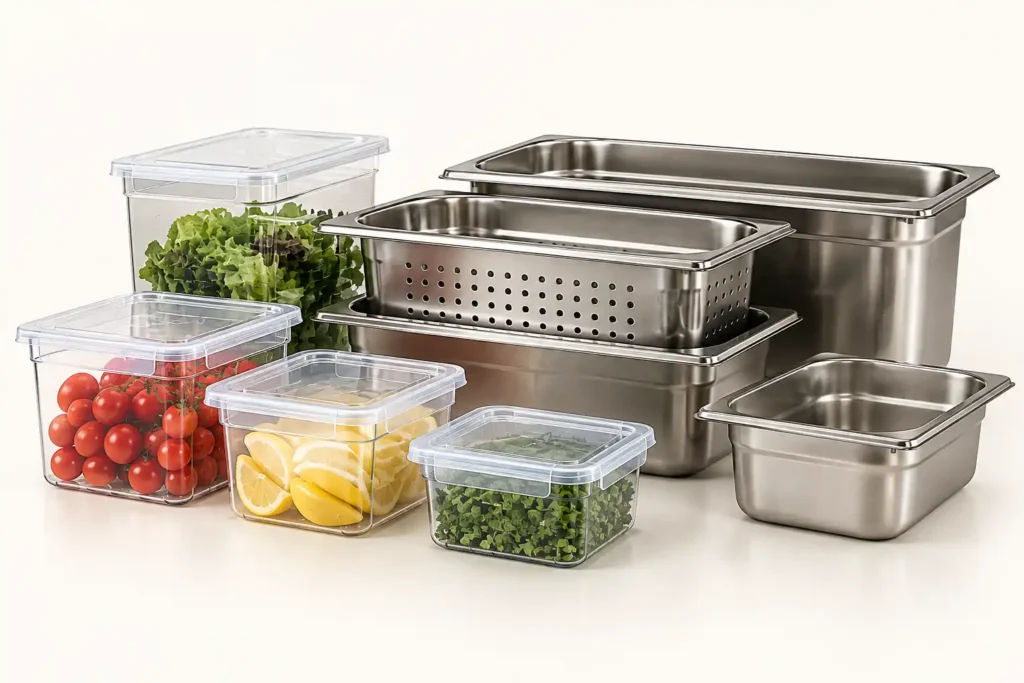
Food Storage & Handling
Food-safe storage containers, lids, ingredient bins, scoops, transport tubs, and handling accessories designed to support organised kitchen workflows and stock control.
PROCUREMENT NOTE
The objective is not simply to create a longer equipment list.
Each smallware item should support a defined workstation, production task, storage requirement, or service function within the kitchen.
Matching Utensils to Kitchen Workflows
Professional kitchen smallwares should be specified around how food moves through the operation—from receiving and preparation to cooking, holding, plating, and service.
A workstation-based approach helps ensure that each kitchen area has the right tools in the right quantities, while reducing unnecessary duplication, staff movement, and operational inefficiency.
01
Receiving & Storage
Food storage containers, ingredient bins, scoops, measuring tools, labels, and handling accessories should support organised receiving, portioning, stock rotation, and safe storage.
02
Preparation
Knives, cutting boards, mixing bowls, peelers, graters, strainers, measuring tools, and preparation utensils should be allocated according to menu requirements and workstation activity.
03
Cooking
Cookware, ladles, spatulas, tongs, whisks, skimmers, and heat-resistant tools should match the cooking methods, equipment configuration, production volume, and expected service intensity.
04
Holding & Transfer
GN containers, lids, transport tubs, portioning tools, and handling equipment help maintain efficient food movement between preparation, cooking, holding, and service areas.
05
Plating & Service Support
Portioning spoons, tongs, ladles, squeeze bottles, trays, and finishing tools should support consistent presentation and efficient service during peak operating periods.
06
Cleaning & Reset
Smallwares should be selected with washing, drying, storage, and rapid workstation reset in mind so that tools can return efficiently to service throughout multiple operating cycles.
PROCUREMENT INSIGHT
The most efficient smallwares package is not the one with the greatest number of items.
It is the one that places the correct tools, in the correct quantities, at the point where each task is performed.
Commercial Selection Criteria for Professional Kitchen Utensils
Professional kitchen utensils should be selected according to commercial performance rather than purchase price or appearance alone. Daily usage intensity, material quality, hygiene requirements, ergonomics, compatibility, replacement frequency, and supplier continuity all influence long-term operational value.
01
Durability
Utensils should withstand repeated commercial use, washing cycles, heat exposure, impact, and handling without premature deformation or failure.
02
Hygiene & Food Safety
Materials and construction should support easy cleaning, minimise contamination risk, and remain suitable for food-contact applications.
03
Ergonomics & Staff Handling
Weight, balance, grip, handle design, and ease of use affect staff comfort, working speed, and consistency during repetitive tasks.
04
Operational Compatibility
Smallwares should fit the kitchen’s equipment, storage systems, workstation dimensions, cooking methods, GN standards, and washing processes.
05
Replacement & Standardisation
Standardised models and reliable supplier availability simplify replacement, inventory control, staff training, and multi-outlet procurement.
06
Lifecycle Value
The lowest purchase price does not always provide the lowest operating cost. Durability, replacement frequency, labour efficiency, and supply continuity should be considered together.
PROCUREMENT INSIGHT
The best-value kitchen utensil is not necessarily the cheapest product.
It is the product that performs reliably, fits the workflow, and requires the least unnecessary replacement over its operating life.
Choosing Materials for Commercial Kitchen Smallwares
Professional kitchen utensils are manufactured from different materials according to their function, exposure to heat, hygiene requirements, handling conditions, and expected service life.
Material selection should therefore consider not only durability, but also food-contact suitability, corrosion resistance, weight, cleaning requirements, and compatibility with the operating environment.
Stainless Steel
Stainless steel is widely used in commercial kitchens because of its durability, corrosion resistance, hygiene, and suitability for repeated washing and intensive daily use.
Best for: cookware, GN containers, bowls, ladles, whisks and high-use utensils.

Aluminium
Aluminium offers good heat transfer and lower weight, but construction quality and application should be evaluated carefully according to the intended cooking method and maintenance requirements.
Best for: cookware, GN containers, bowls, ladles, whisks and high-use utensils.
Food-Safe Plastics
Polycarbonate, polypropylene and other food-safe plastics can provide lightweight handling, visibility, impact resistance, and practical storage solutions where appropriate.
Best for: storage containers, measuring tools, cutting boards and handling applications.
Stainless Silicone & Heat-Resistant Materials
Heat-resistant materials provide flexibility and help protect cookware surfaces while supporting specialised preparation and cooking tasks.
Best for: spatulas, scrapers, brushes and selected high-temperature utensils.
| Selection Factor | What to Check |
|---|---|
| Food Contact | Suitability for repeated commercial food use |
| Corrosion Resistance | Exposure to moisture, acids and cleaning chemicals |
| Heat Resistance | Maximum operating temperature and cooking application |
| Cleaning | Dishwasher suitability and ease of sanitation |
| Weight & Handling | Staff comfort during repetitive use |
| Construction Quality | Handles, joints, welds, thickness and overall rigidity |
PROCUREMENT INSIGHT
Material specification should follow the task—not a single material preference.
A well-planned smallwares package uses different materials where each delivers the strongest balance of performance, hygiene, handling, and lifecycle value.
Quantity Planning & Par Levels for Commercial Kitchen Smallwares
Smallwares quantities should be planned around kitchen capacity, workstation requirements, production volume, operating shifts, washing cycles, and expected replacement needs.
Ordering too few utensils can create bottlenecks during peak service, while excessive quantities increase capital cost, storage pressure, and inventory complexity. The objective is to establish practical par levels for each workstation and operating cycle.
1
Workstation Count
Each active preparation, cooking, and service station should have the tools required to operate independently without unnecessary sharing between work areas.
2
Production Volume
Higher meal volumes and intensive preparation cycles may require duplicate tools, larger-capacity smallwares, and additional backup stock.
3
Shift & Service Pattern
Operations running multiple shifts or continuous production should consider how utensils move between use, washing, drying, and return to service.
4
Washing & Turnaround Time
Dishwashing capacity and turnaround time directly affect the number of utensils required to maintain uninterrupted kitchen operations.
5
Breakage & Replacement Allowance
Selected smallwares should include a realistic allowance for wear, loss, damage, and replacement without creating excessive spare inventory.
Use a practical workstation-based logic to estimate the quantity required for each smallware item.
1
Workstation Requirement
Typical number of items needed per station, such as knives, spatulas, bowls, and GN containers.
2
Active Stations
Total number of preparation, cooking, and service stations operating simultaneously.
3
Washing Cycle Allowance
Additional quantity required while utensils are being washed, dried, and returned to service.
4
Operational Backup
Extra quantity allocated for peak periods, unexpected losses, wear, and short-term replacement needs.
5
Practical Par Level
Recommended working quantity for each smallware item based on workstation demand, operating cycles, and backup requirements.
This is a planning framework, not a fixed industry formula. Final quantities should reflect the actual operating model of the kitchen.
Cost Optimization & Standardisation for Kitchen Smallwares
Professional kitchen smallwares can become unnecessarily expensive when similar functions are covered by too many models, brands, sizes, or suppliers.
A structured standardisation strategy helps hospitality projects reduce procurement complexity, simplify replacement, improve stock control, and create better commercial leverage without compromising operational performance.
01
Reduce Unnecessary SKU Variation
Avoid multiple products performing essentially the same task unless different specifications are operationally justified.
02
Standardise Across Workstations
Where practical, use consistent models, sizes, and utensil types across similar preparation and cooking stations.
03
Rationalise Brands & Suppliers
Limiting unnecessary supplier fragmentation can simplify purchasing, replacement sourcing, documentation, and commercial negotiation.
04
Align Specification With Actual Use
Premium or specialised products should be used where they provide measurable operational value rather than being applied uniformly throughout the kitchen.
05
Evaluate Lifecycle Cost
Compare purchase price with durability, replacement frequency, supply continuity, and expected service life before finalising the BOQ.
| Fragmented Procurement | Standardised Procurement |
|---|---|
| Multiple similar SKUs | Reduced product variation |
| Several suppliers | Rationalised supplier base |
| Difficult replacement | Easier replenishment |
| Higher stock complexity | Simplified inventory |
| Price-focused buying | Lifecycle value approach |
PROCUREMENT INSIGHT
Standardisation is not about reducing operational choice.
It is about removing unnecessary variation while preserving the tools and specifications genuinely required by each kitchen function.
Common Kitchen Smallwares Procurement Mistakes
Kitchen smallwares are often purchased late in the project and treated as a simple checklist category.
In practice, poor planning can create shortages, unnecessary duplication, inconsistent specifications, difficult replacement, and avoidable operating cost after opening.
Buying Only From a Generic List
Using a standard smallwares list without adapting it to the actual menu, kitchen layout, workstation design, and production volume can lead to both shortages and unnecessary items.
Ignoring Workstation Allocation
When tools are not assigned to specific preparation and cooking stations, staff may be forced to share utensils across work areas, increasing movement and reducing efficiency.
Over-Specifying Premium Products
Premium products should be used where they provide measurable operational value. Applying the highest specification to every item can increase cost without improving performance.
Excessive Product & Brand Variation
Too many models, sizes, and brands make replacement, staff training, inventory control, and future purchasing more difficult.
Underestimating Replacement Needs
Frequently used smallwares are exposed to wear, loss, damage, and repeated washing. No replacement allowance can create operational shortages shortly after opening.
Selecting Without Supply Continuity
Choosing products that are difficult to source again can create long-term replacement problems, especially for international hotel and resort projects.
KEY RISKS
Operational Risk
Shortages, staff movement, workflow disruption.
Procurement Risk
Too many SKUs, suppliers, and replacement difficulties.
Cost Risk
Overspending, unnecessary duplication, premature replacement.
PROCUREMENT INSIGHT
Smallwares procurement problems rarely come from one expensive item.
They usually result from hundreds of small specification and quantity decisions that were not coordinated as one operating system.
A Structured Procurement Framework for Professional Kitchen Smallwares
OSE Project Supply approaches kitchen smallwares as an operational procurement package rather than a simple product list.
We review the kitchen concept, workstation requirements, BOQ structure, quantity logic, material specifications, supplier options, replacement strategy, and logistics requirements as one coordinated process.
Review the Kitchen & BOQ
We assess the kitchen layout, menu concept, operating model, equipment schedule, and existing smallwares BOQ to identify gaps, overlaps, and specification risks.
Define Workstation Requirements
Smallwares are mapped to preparation, cooking, holding, storage, and service functions so each workstation receives the tools required for its actual tasks.
Optimise Specifications & Quantities
Product type, material, durability level, quantity, and par levels are adjusted according to operational demand rather than generic purchasing assumptions.
Rationalise Brands & Suppliers
We evaluate suitable manufacturers and suppliers based on specification fit, commercial value, replacement continuity, and procurement efficiency.
Consolidate & Coordinate Supply
Approved items are consolidated into a coordinated procurement package to simplify ordering, documentation, packing, and project logistics.
Support Delivery & Replacement Planning
We consider shipment requirements, project phasing, spare quantities, and future replenishment so the smallwares package remains practical after opening.
Global Sourcing Without Manufacturer Bias
OSE Project Supply is not limited to a single manufacturer or product catalogue.
We evaluate suitable suppliers according to the project brief, required quality level, budget, destination, operational standards, and replacement availability.
This allows the final smallwares package to balance specification, commercial value, supply continuity, and logistics efficiency.
Procurement Outcome
01
Operational Fit
Tools aligned with actual kitchen workflows.
02
Specification Control
Reduced duplication and unnecessary variation.
03
Commercial Efficiency
Better balance between purchase cost and lifecycle value.
03
Supply Continuity
More practical replacement and replenishment planning.
OSE Positioning
The objective is not to supply the largest possible smallwares list.
It is to create a controlled procurement package that supports the kitchen from opening day through daily operation and future replacement.
Related Procurement Support for Kitchen Smallwares Projects
Professional kitchen smallwares are rarely procured in isolation. Specification, quantity planning, supplier selection, cost control, and logistics often need to be coordinated with the wider hospitality procurement process.
The following OSE services can support the project beyond the smallwares package itself.
01
Hotel OS&E Procurement Services
Integrate professional kitchen utensils and smallwares with the broader hotel or resort OS&E procurement scope to improve specification alignment, purchasing coordination, and project delivery.
Explore Solution →
02
Strategic Procurement Consulting
Support complex hospitality projects with independent supplier evaluation, sourcing strategy, commercial comparison, specification review, and procurement planning.
Explore Solution →
03
BOQ Procurement & Cost Optimization
Review smallwares and wider project BOQs to validate quantities, specifications, supplier structure, and opportunities for standardisation and procurement efficiency.
Explore Solution →
04
Global Procurement & Logistics Coordination
Manage supplier follow-up, order consolidation, documentation, shipment planning, and delivery coordination for hospitality projects involving multiple product categories and sourcing locations.
Explore Solution →
Depending on project scope, these services can be engaged individually or combined into a coordinated procurement approach covering smallwares, wider OS&E requirements, cost control, and project delivery.
Professional Kitchen Utensils Procurement FAQs
Build a More Efficient Kitchen Smallwares Package
Whether you are preparing a new hospitality project, reviewing an existing BOQ, or standardising smallwares across multiple outlets, OSE Project Supply can support specification review, quantity planning, supplier evaluation, sourcing, and coordinated project supply.
Send your kitchen smallwares BOQ or specification list for an independent review of quantities, materials, standardisation opportunities, supplier options, and procurement efficiency before ordering begins.
Discuss your kitchen operation, workstation requirements, production volumes, and procurement priorities with our team to define the most suitable smallwares strategy for your project.
Explore Our OS&E Categories →
Practical specifications. Controlled quantities. Reliable sourcing. Better lifecycle value.